Design Goal
How might we design a multimodal, interactive robotic environment that engages concertgoers regardless of their proximity to the stage to increase the concert's overall energy?
Background
Concerts are multi-sensory experiences that blend visuals and sound, fostering dynamic interactions between the environment, performers, and audiences. Through participatory rituals such as cheering, call-and-response, and singing, audiences behave as a unified collective. These rituals generate “collective effervescence,” a sense of sacredness and connection experienced in large groups, which is essential for positive concert experiences. Audience members want to feel like active participants in the performance.
Problems
Audience Engagement
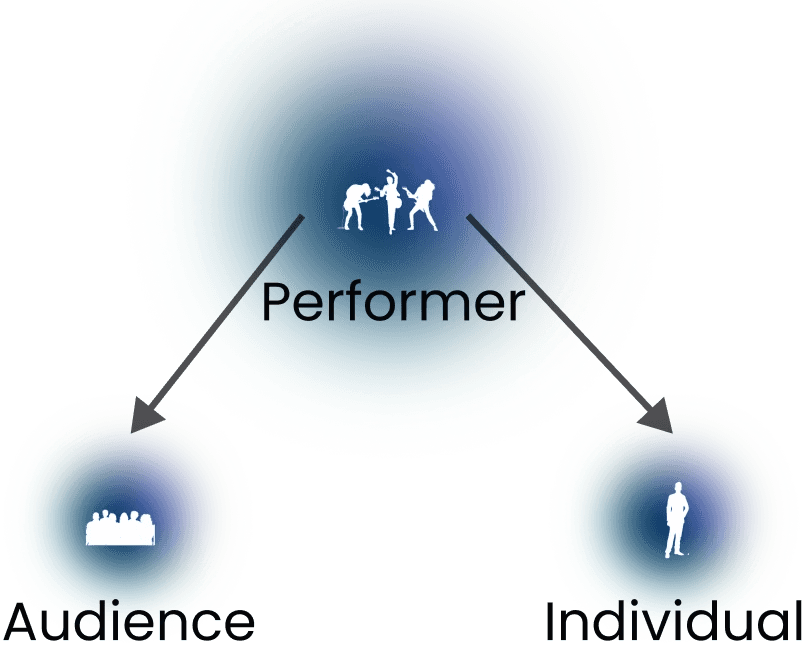
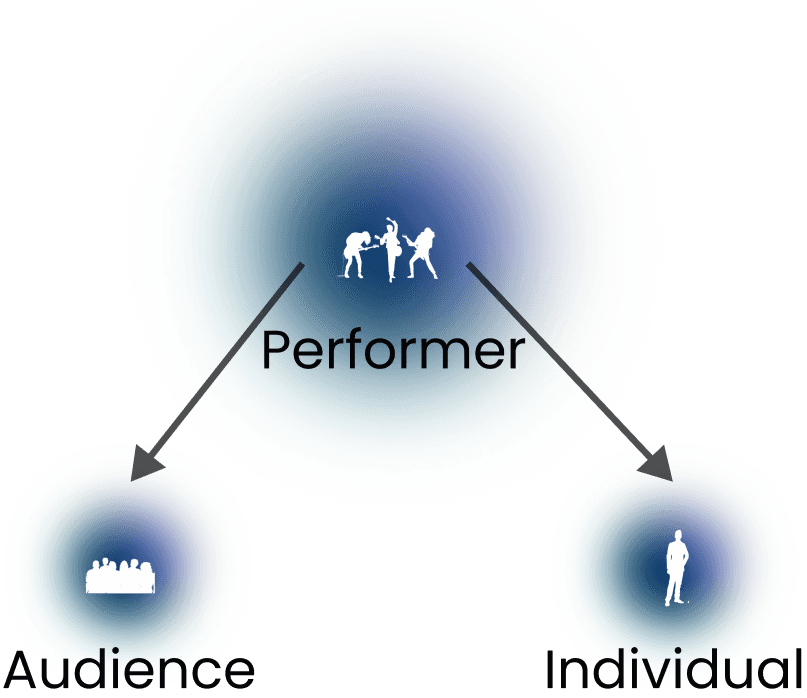
An audience needs to be engaged to help the performer create energy and a sense of individual immersion.
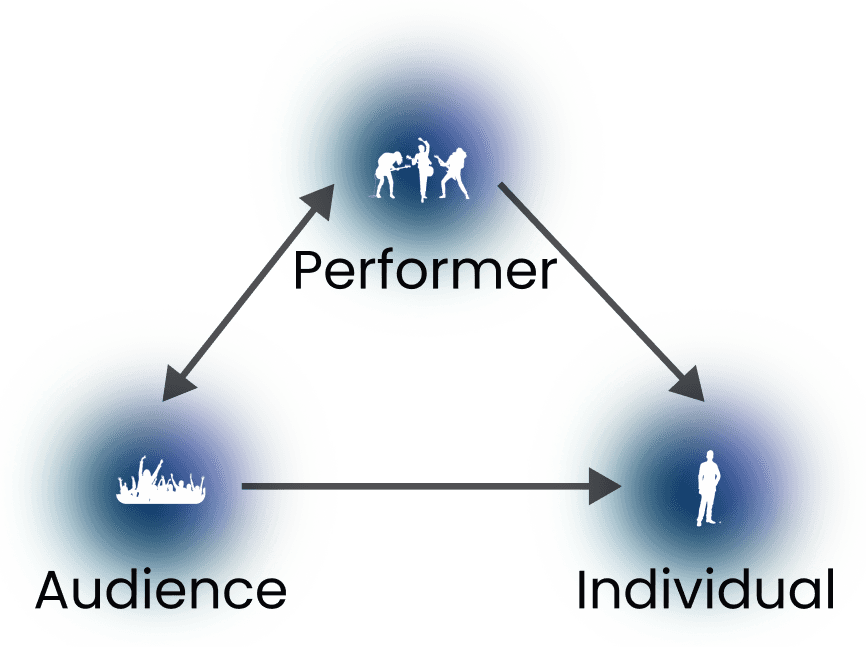
An audience is disengaged it makes it difficult for performers to sustain energy and limits individual immersion.
Front Bias
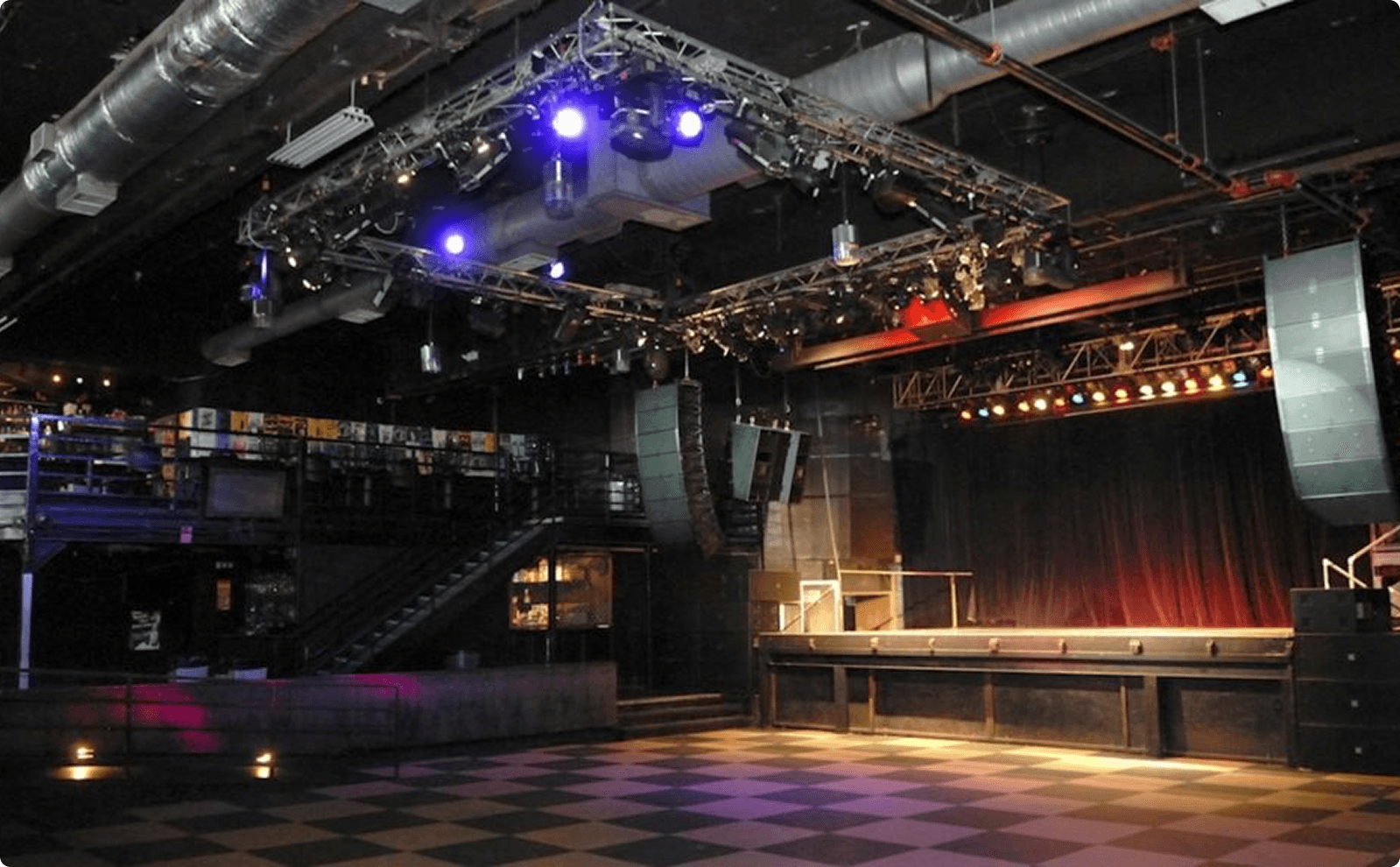
People feel disconnected and unengaged because most of a concert's sensory experience (lighting, sound, and music’s vibration) is concentrated towards the front of the crowd near the stage. Further back, the sensory experiences are less immersive.

you'll see an artist with the way that it's mixed is really tailored to count in the front of the venue. The people down in the pit.
Concert Attendee
Ceiling Space
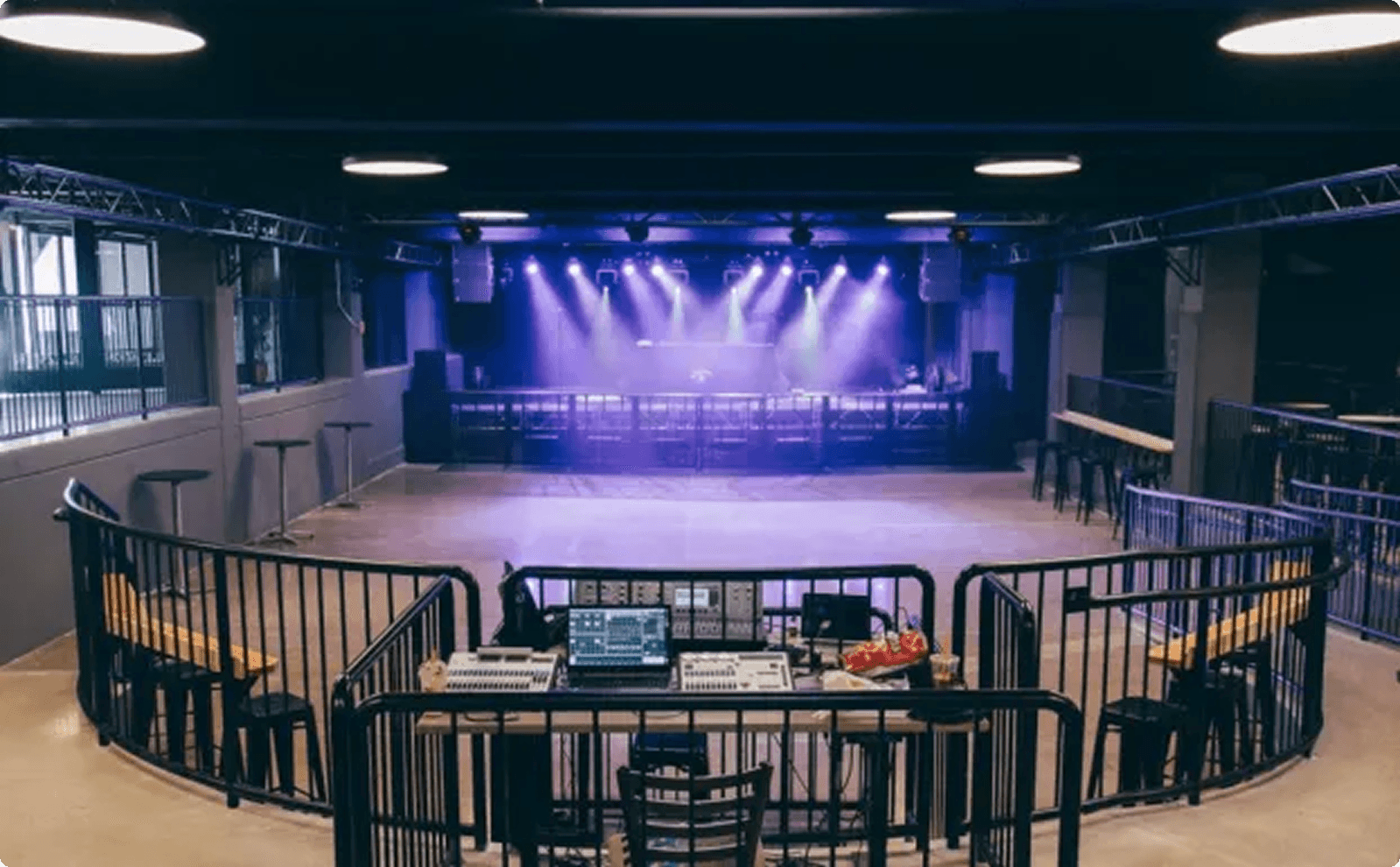
a lot of venues especially newer construction... it's kind of like a concrete box... they don't really put thought into soundproofing or ambiance.
Concert Attendee
Concept Ideation
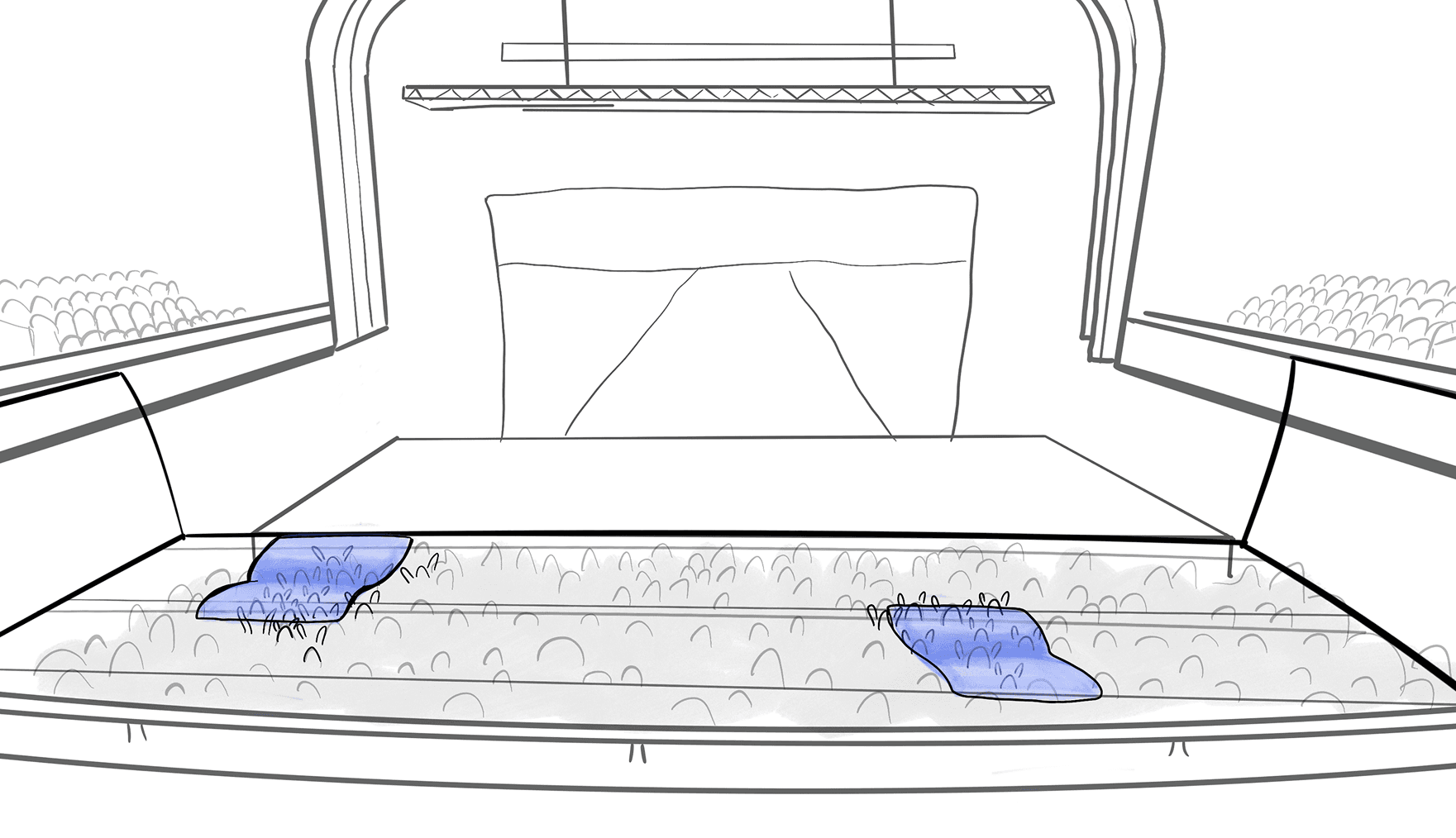
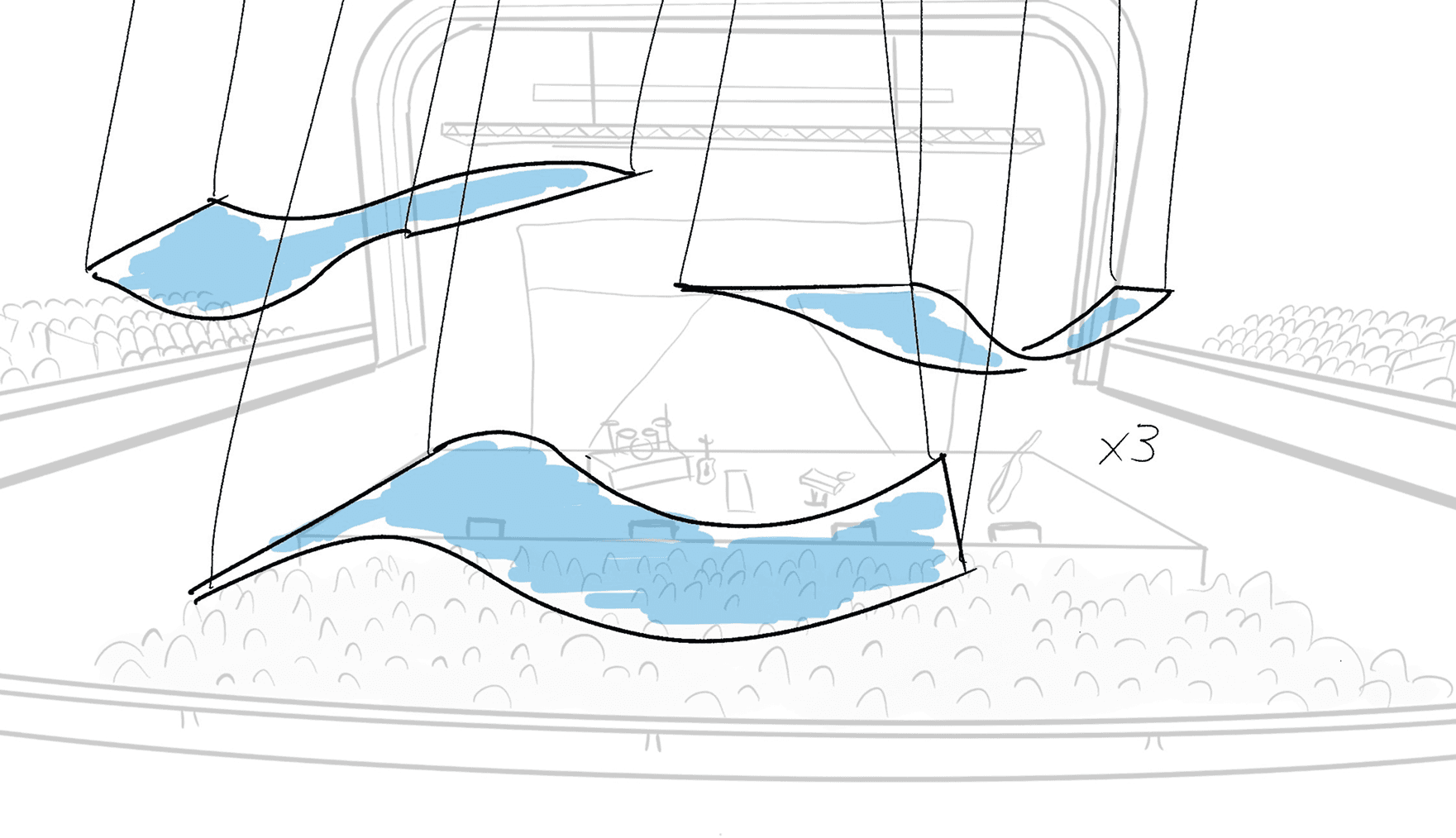
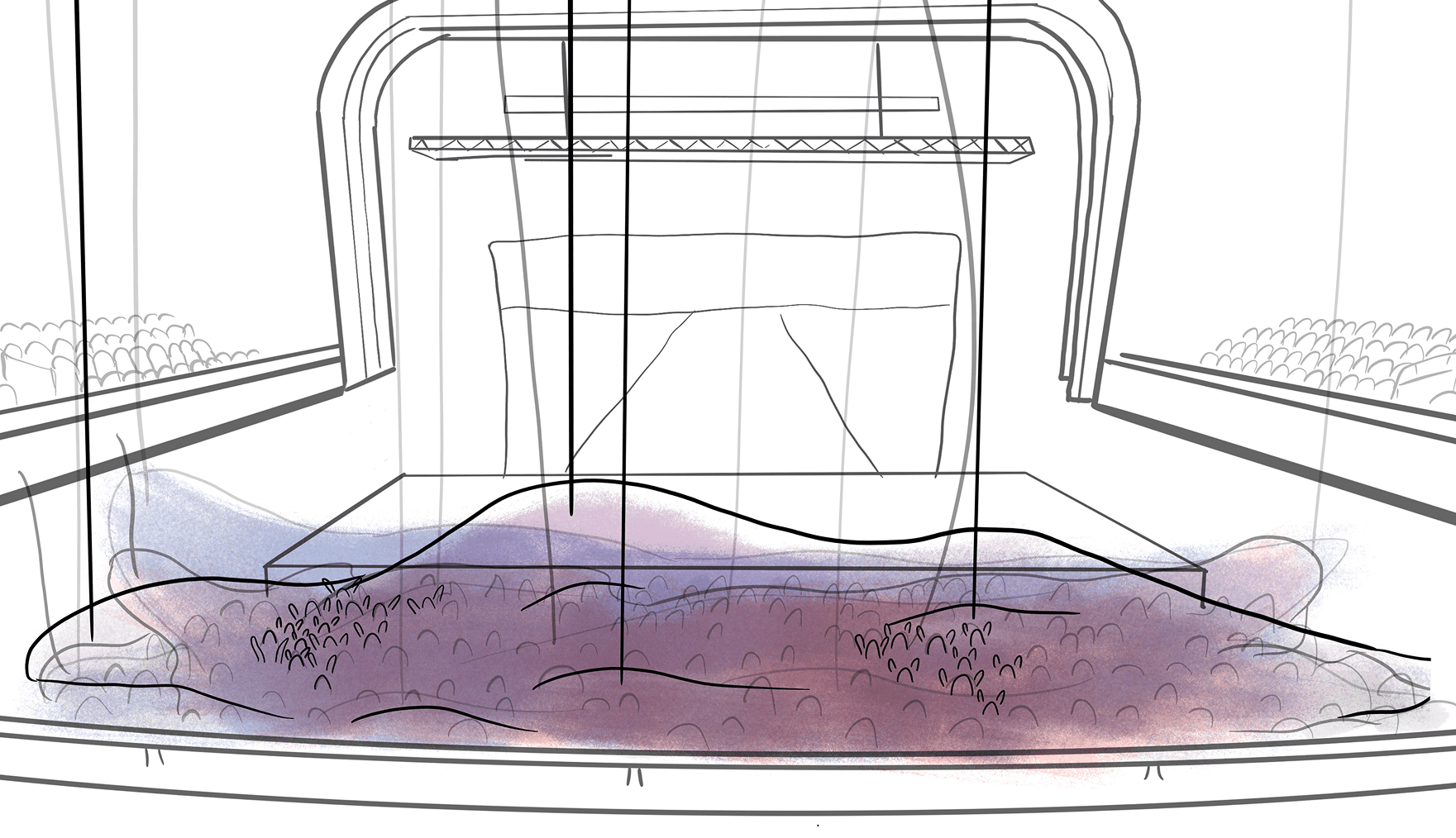
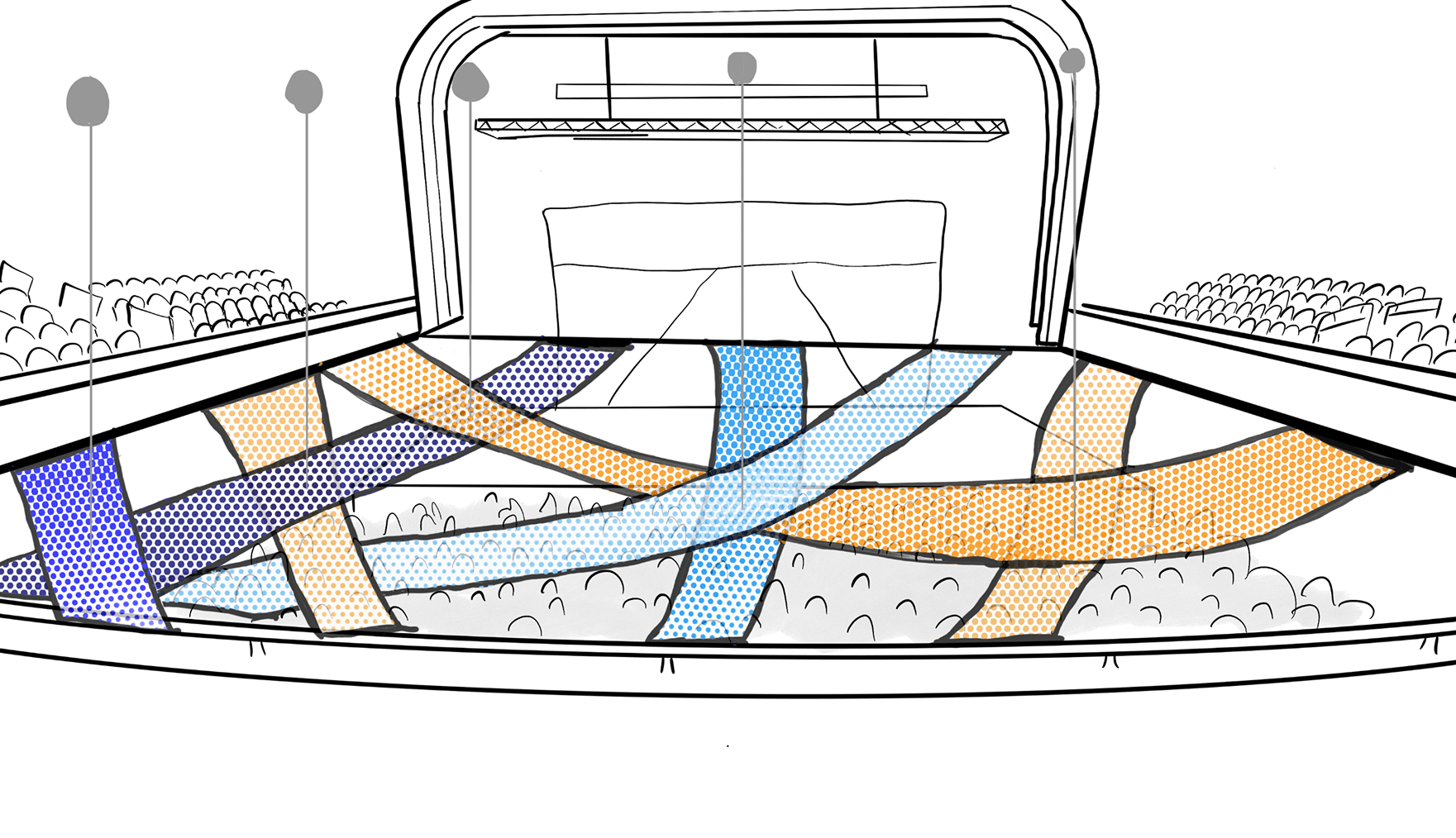
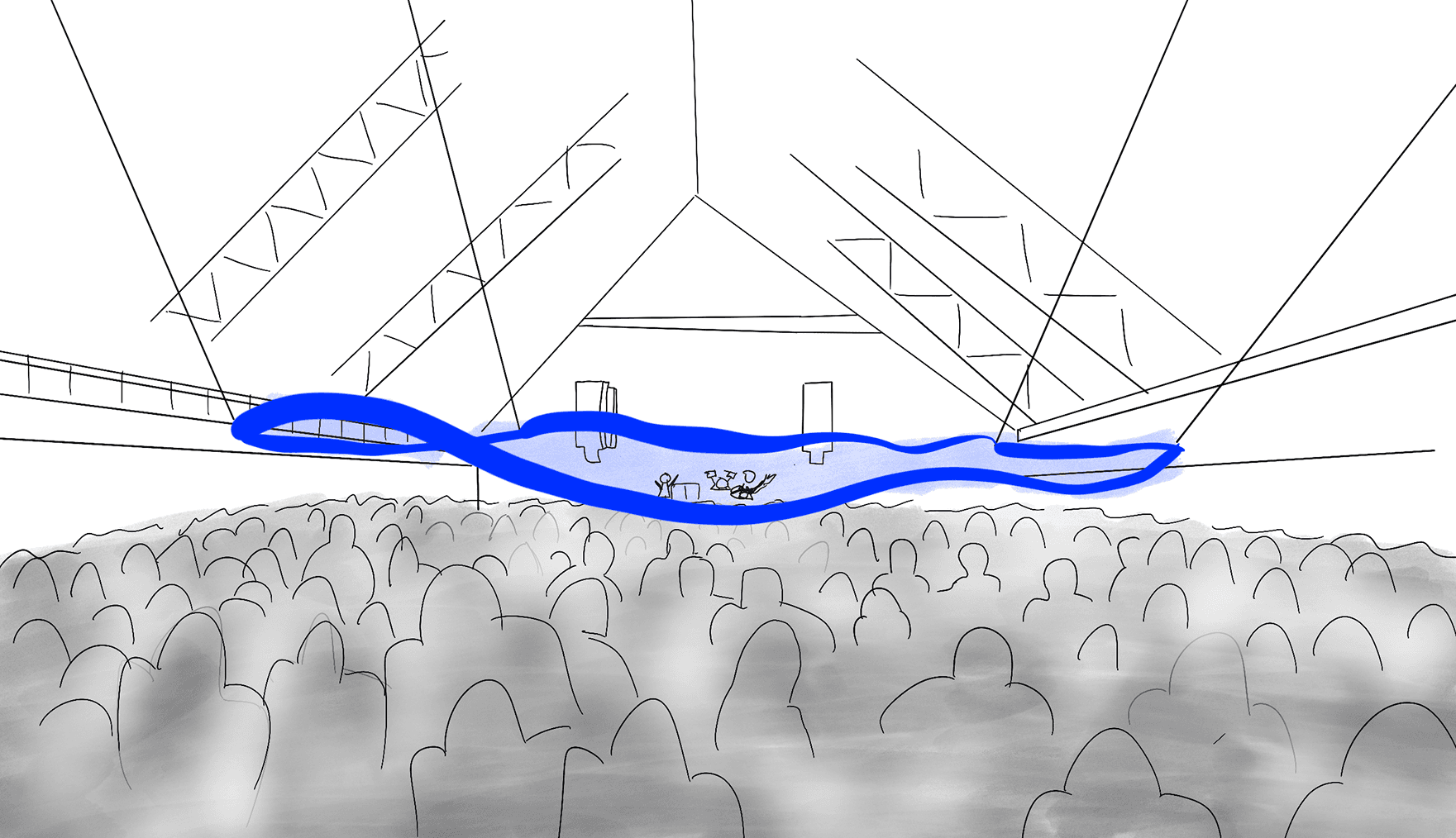
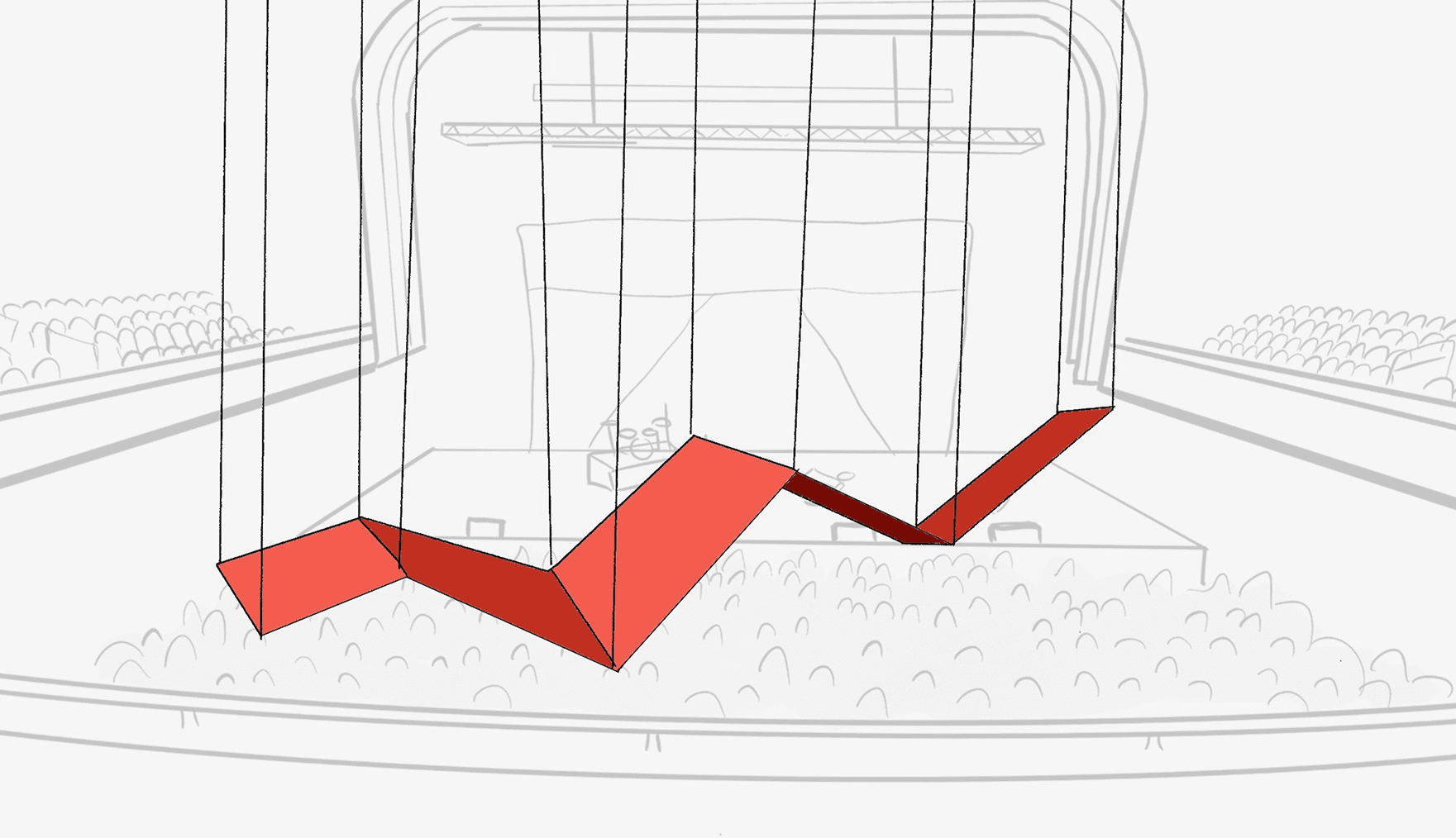
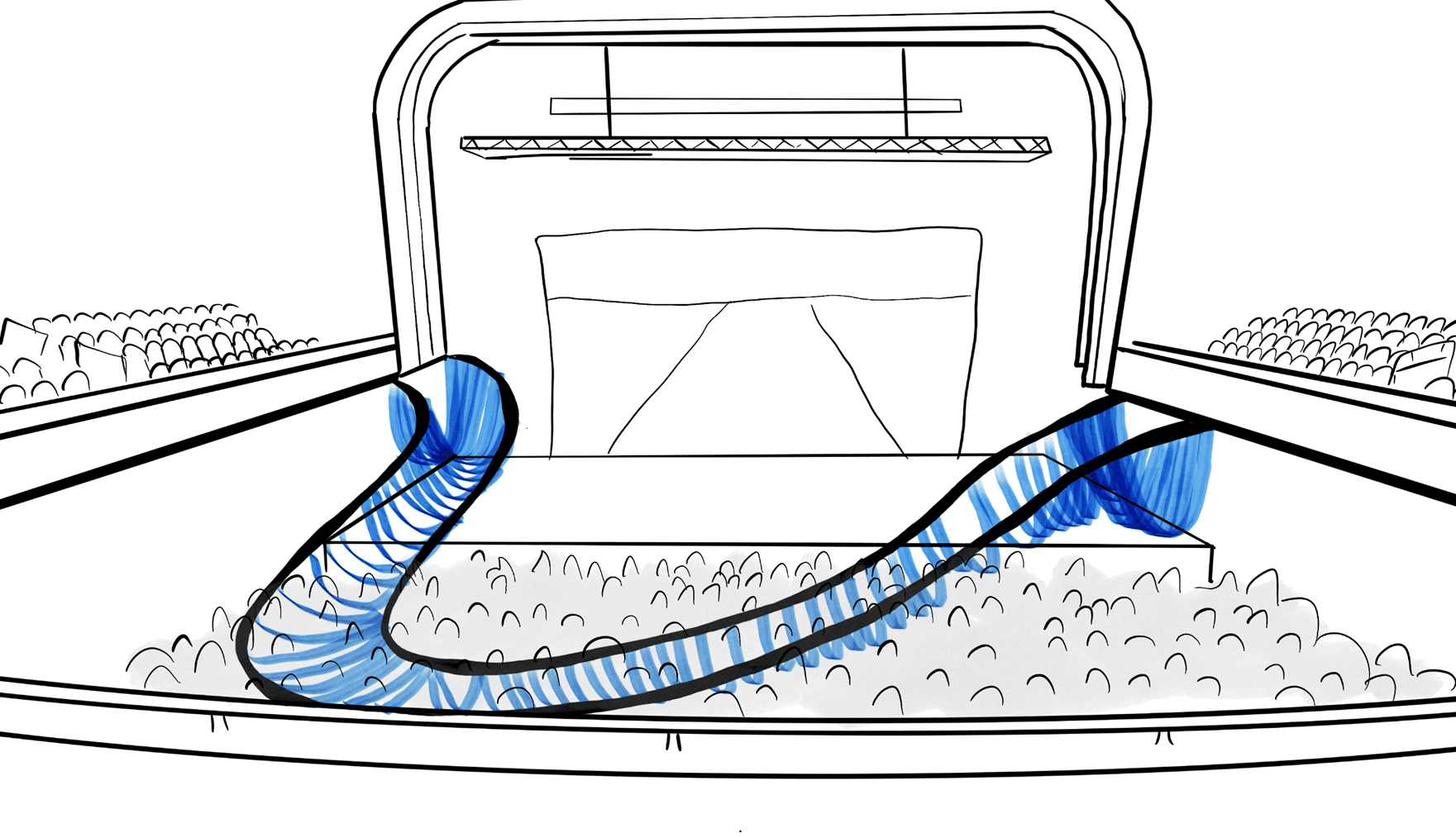
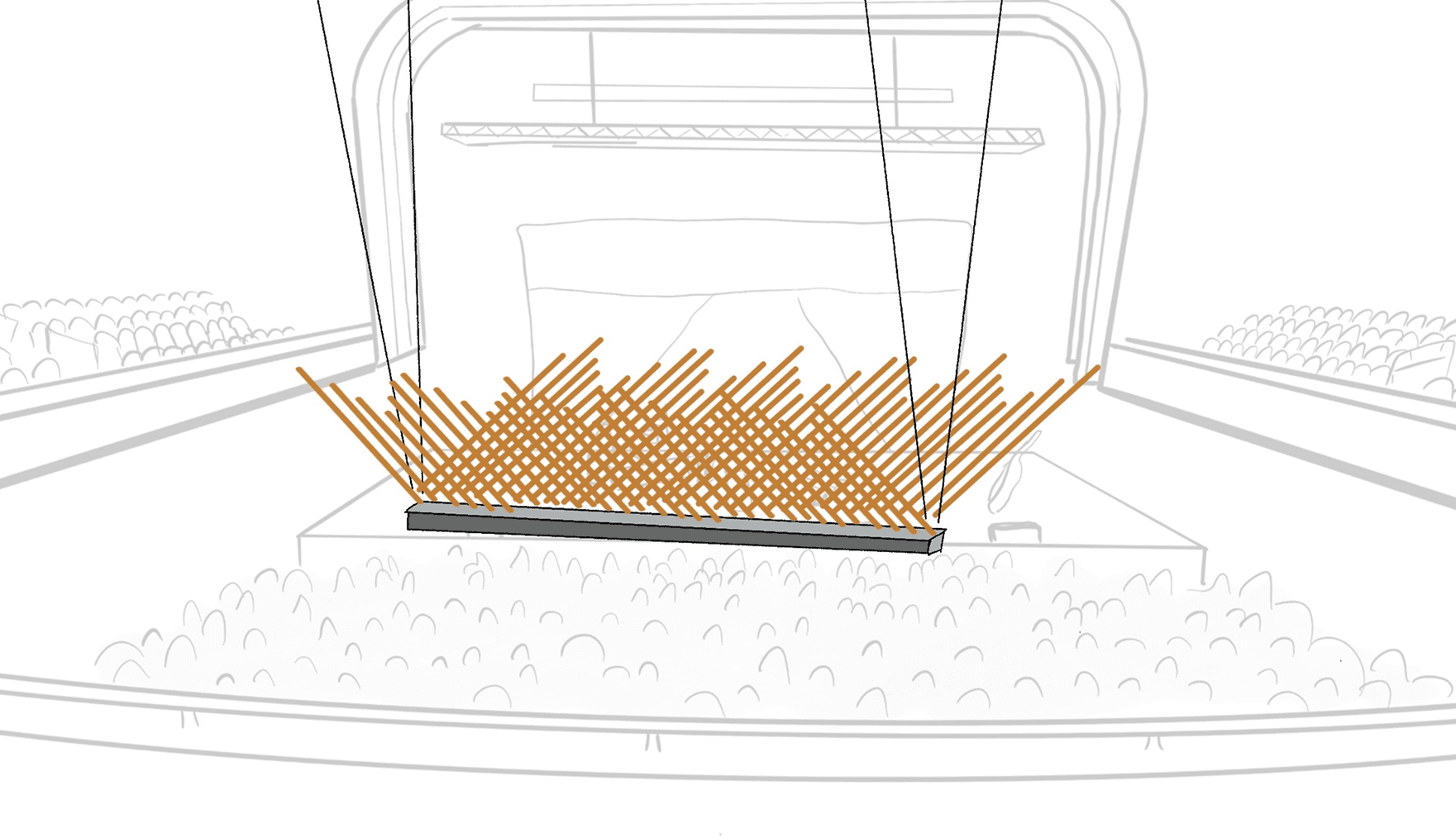
User Testing
Form Engament Testing
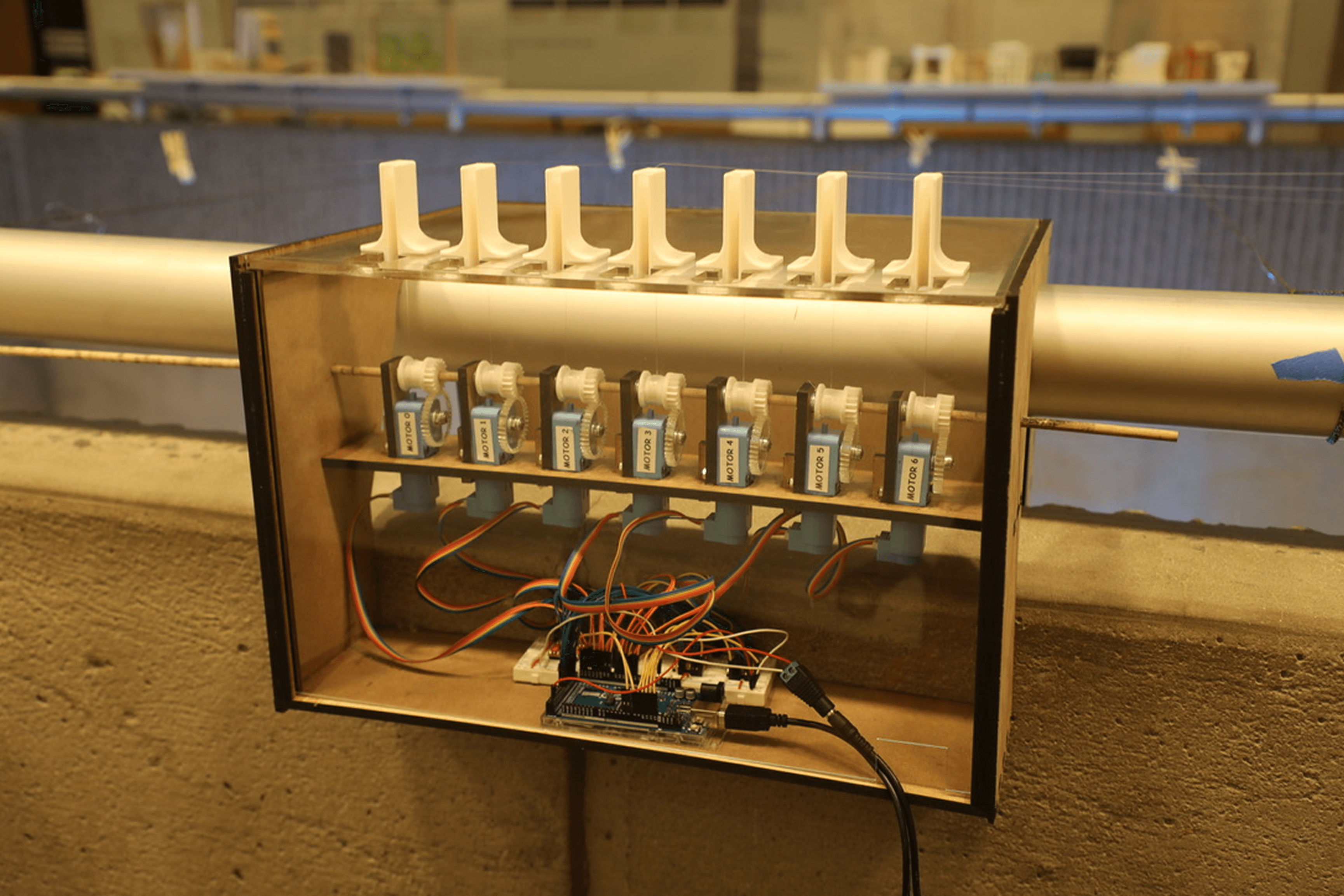
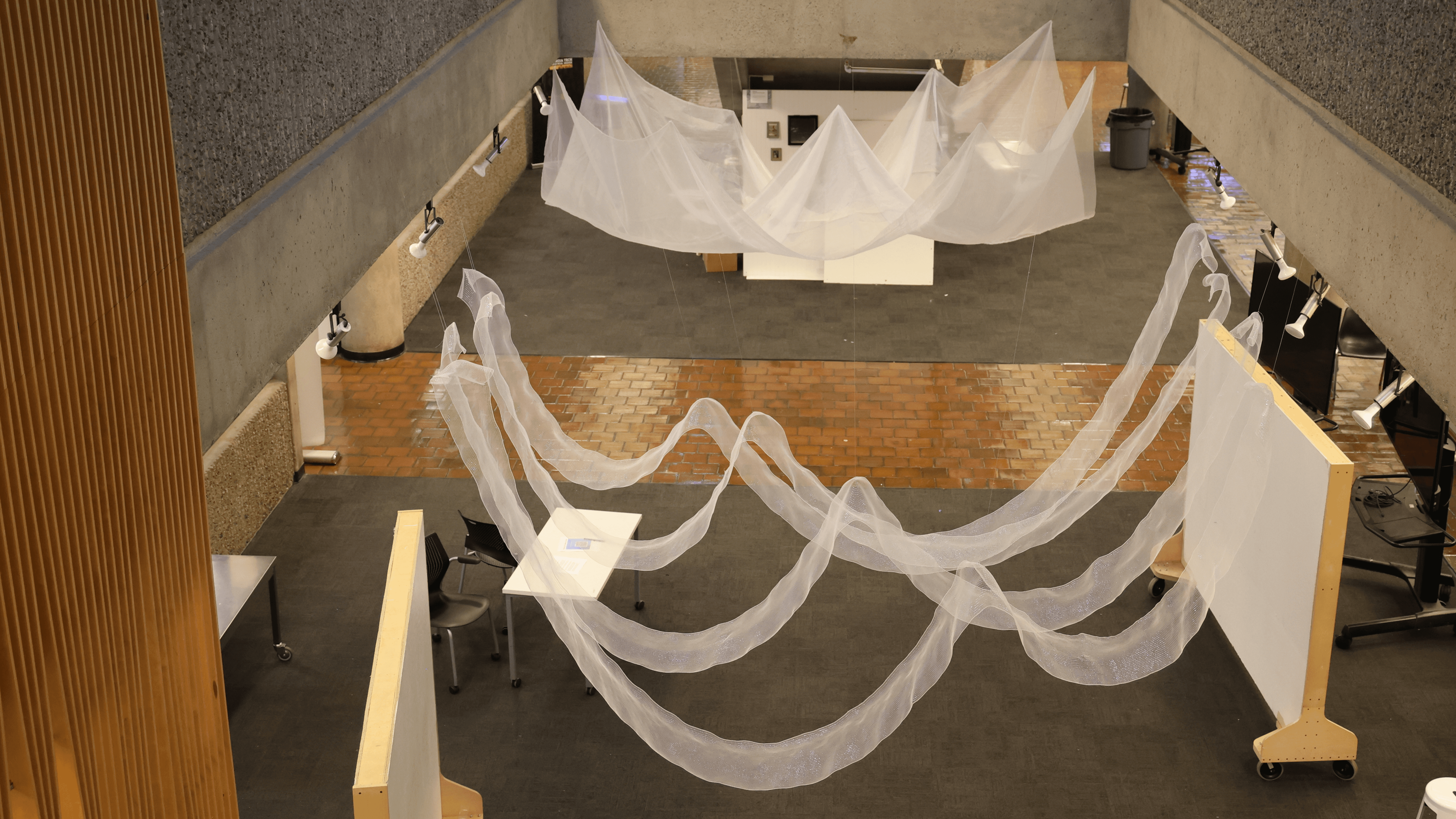
We tested two prototypes: the Sheet Prototype (pictured in the back) and the Strip Prototype (pictured in the foreground). The goal was to test whether the prototypes increased user engagement by having the participants stand under each prototype and simulating a concert environment in which the prototypes responded to the participants' behaviors.
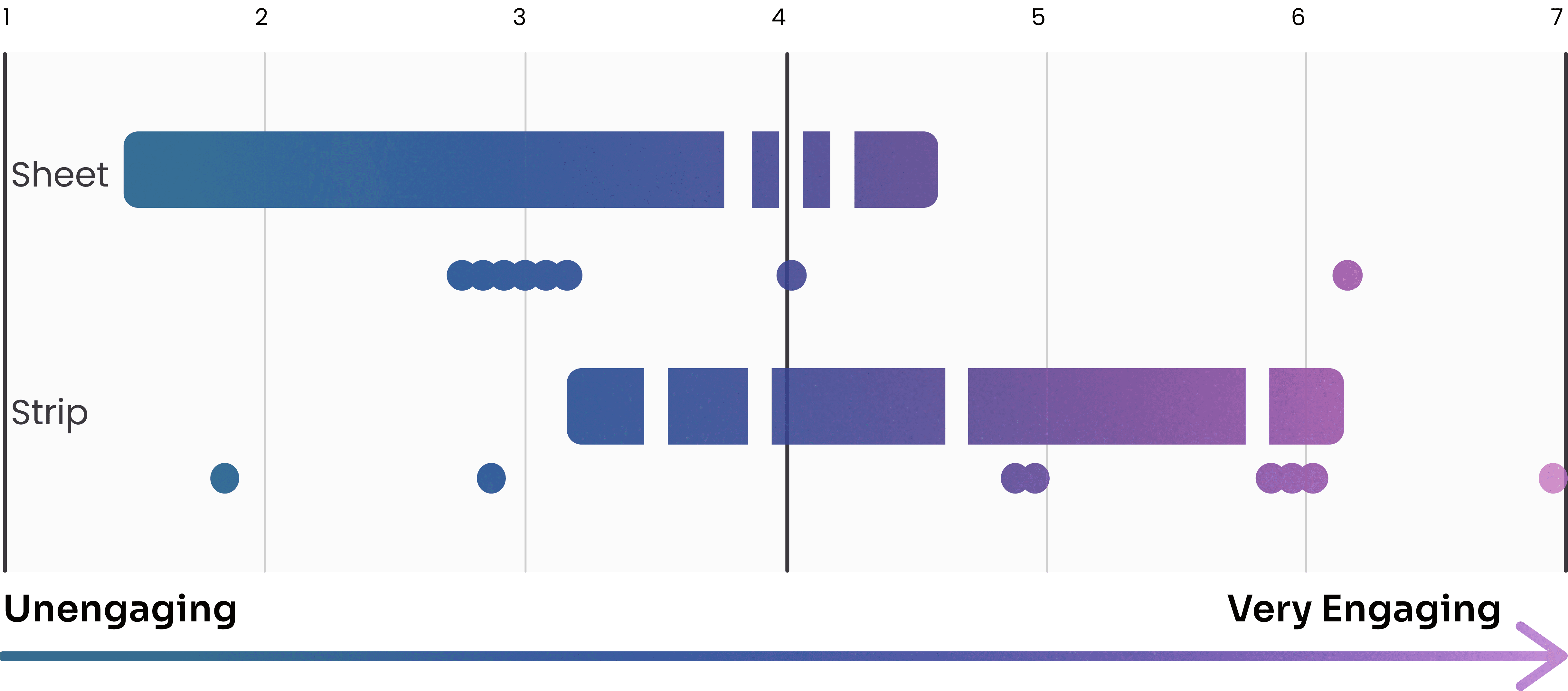
Participants found the Strip Prototype movements more engaging than those of the Sheet Prototype, citing that the strips’ motion was more distinct and easier to see.
Response Mode Testing
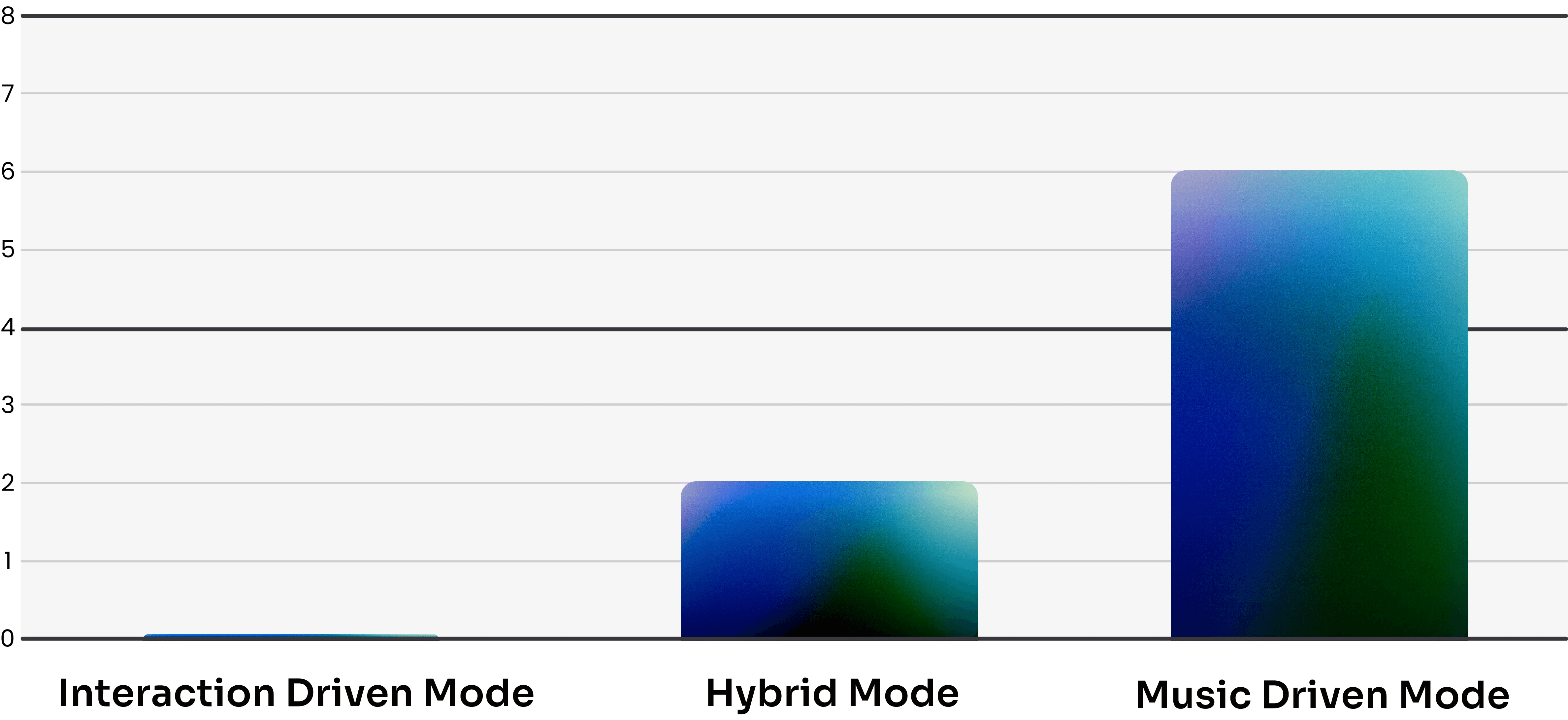
The goal was to evaluate three different response modes, testing the mechanics and effectiveness of the prototypes’ ability to increase user engagement.
Music Driven Mode
Prototypes move up and down to the beat of the music. Displacement scales based on the volume and intensity of the music.
Interaction-Driven Mode
Prototypes move up and down only when the audience moves or dances. Displacement scales based on the intensity of crowd movement.
Hybrid Mode
Prototypes move up and down to the beat of the music. Displacement scales relative to the intensity of crowd movement.
Outcome
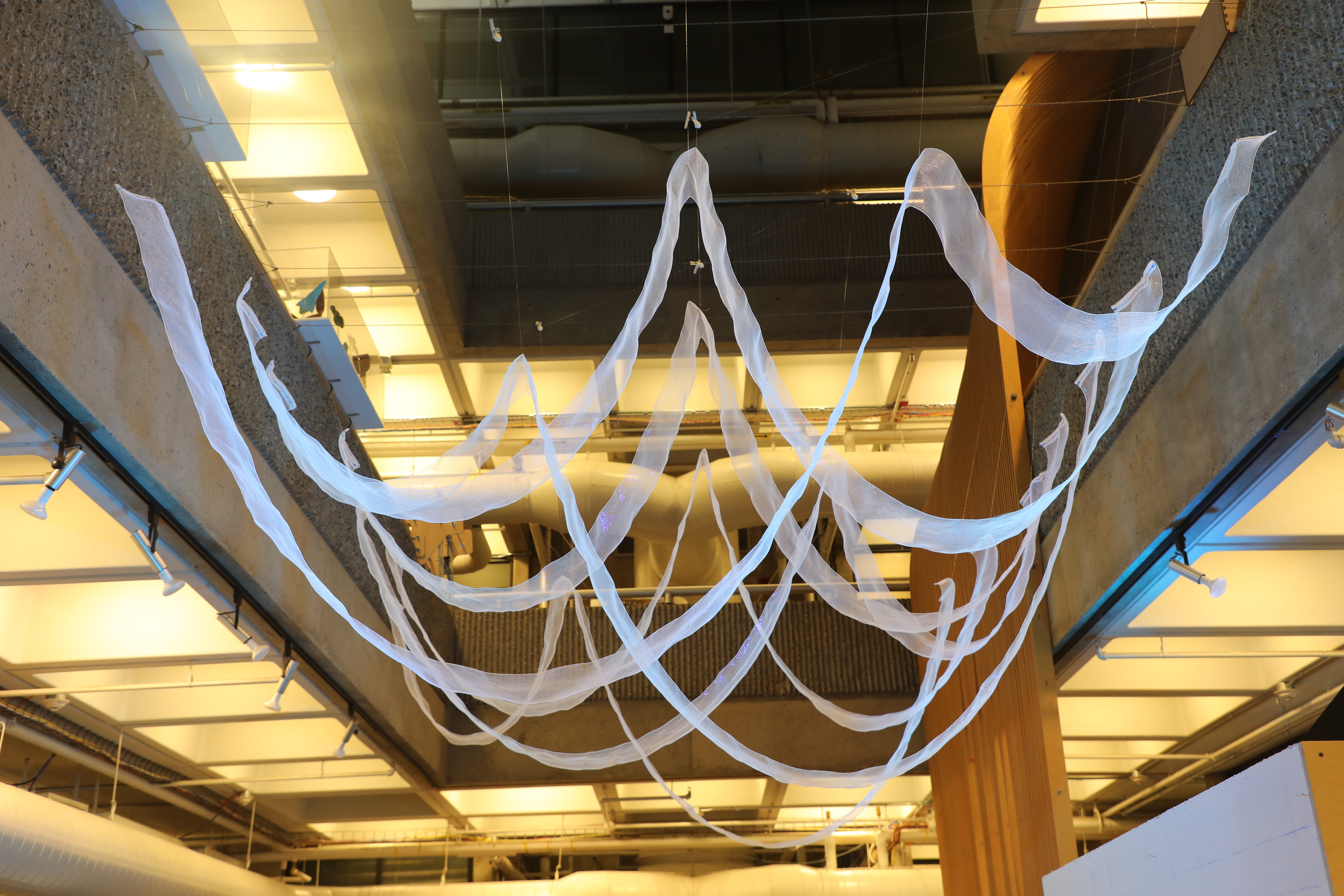
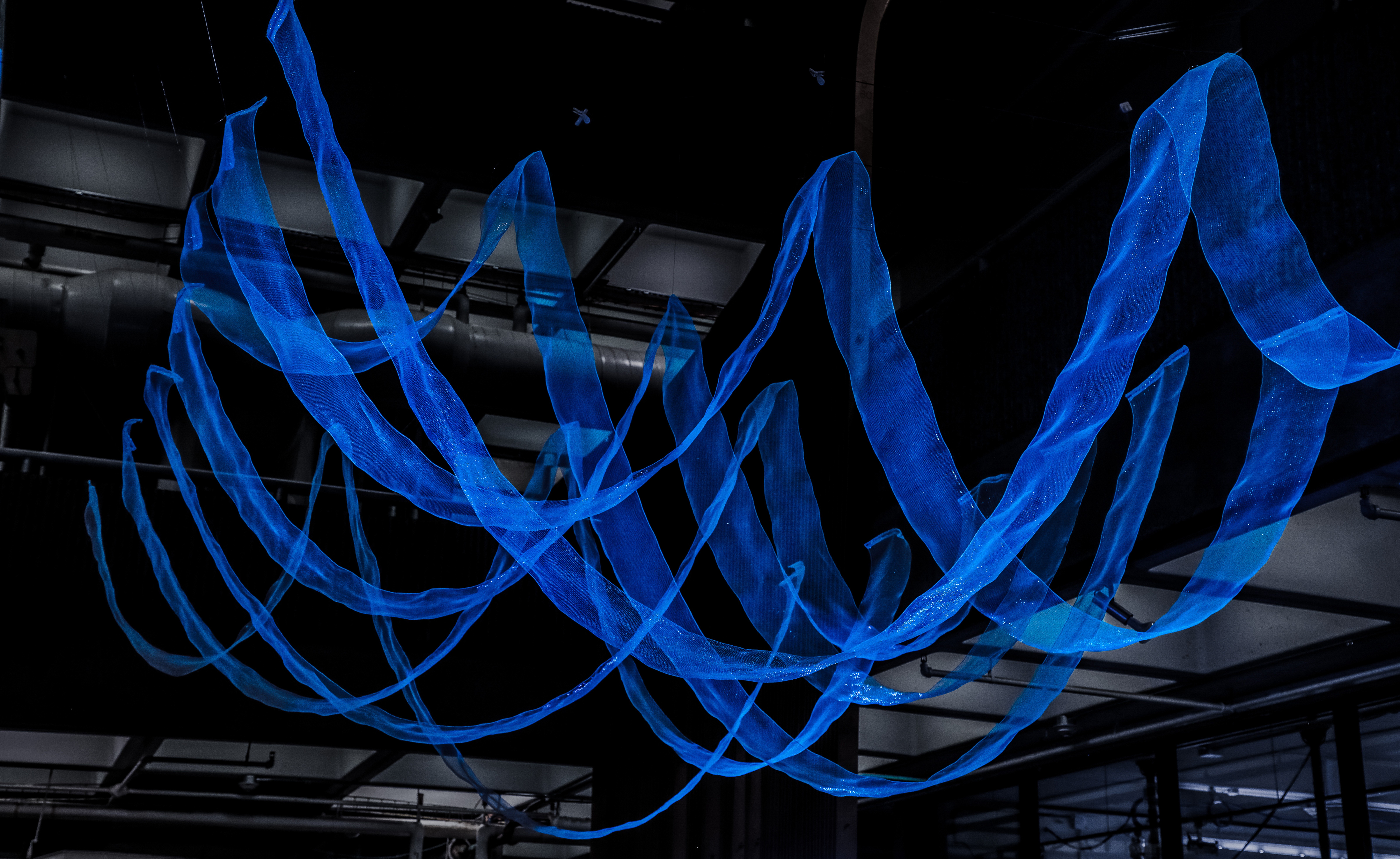
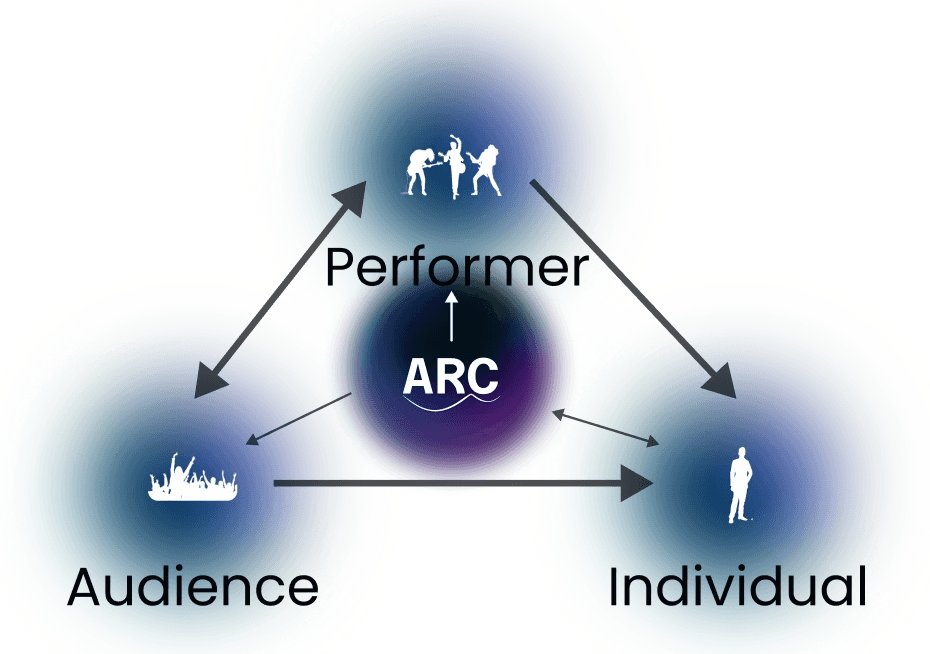
The hybrid response mode means that ARC actuates everywhere in a constant motion that is in sync to the music, but the magnitude of the actuation is driven by the audience's behavior. This means ARC is able to reduce the burden place on the performer by adjusting its movements to match the audience behavior and energy level. Creating a system that audience members want to interact with thus increasing the energy flow of a concert.
Functionality
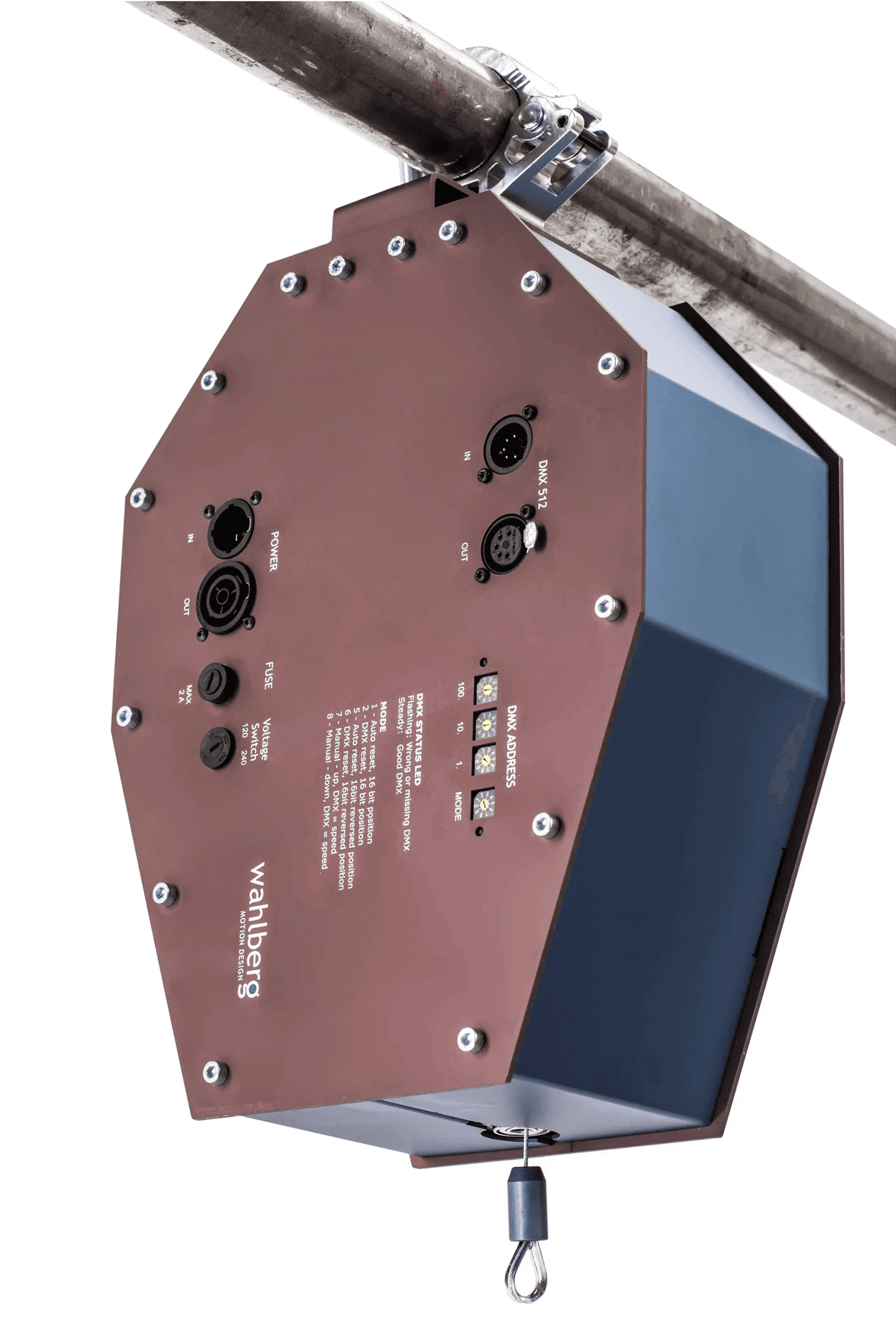
The ARC system integrates with DMX control systems that concert venues already use to control lights and sound. DMX winches lift and lower the strips' actuation points.
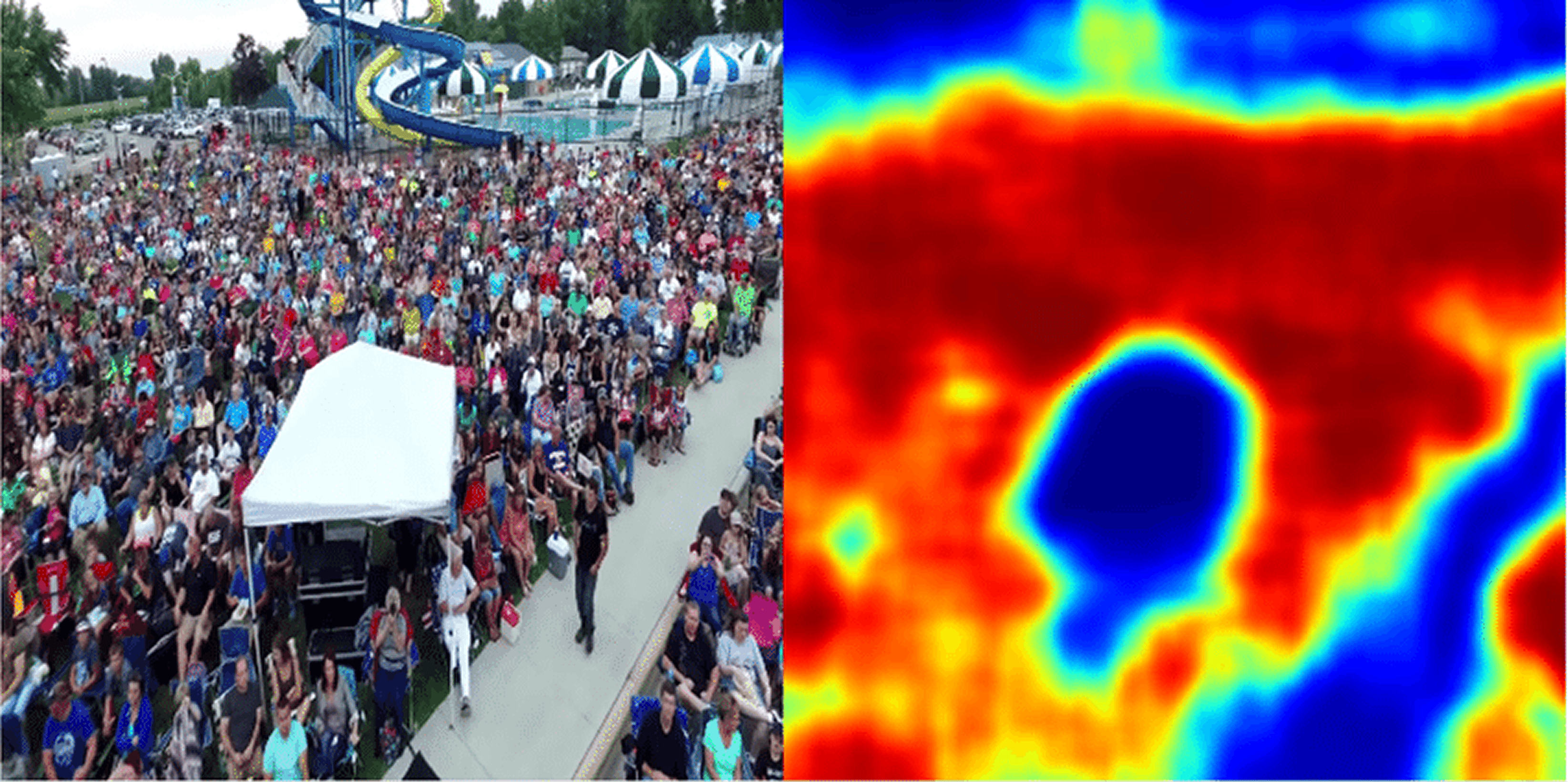
ARC uses computer vision to map the crowd in a grid pattern that corresponds to the location of the strips then measures the frequency of movement in different zones in order to quantify crowd energy to convert into motion.
Final Design